deepen studio
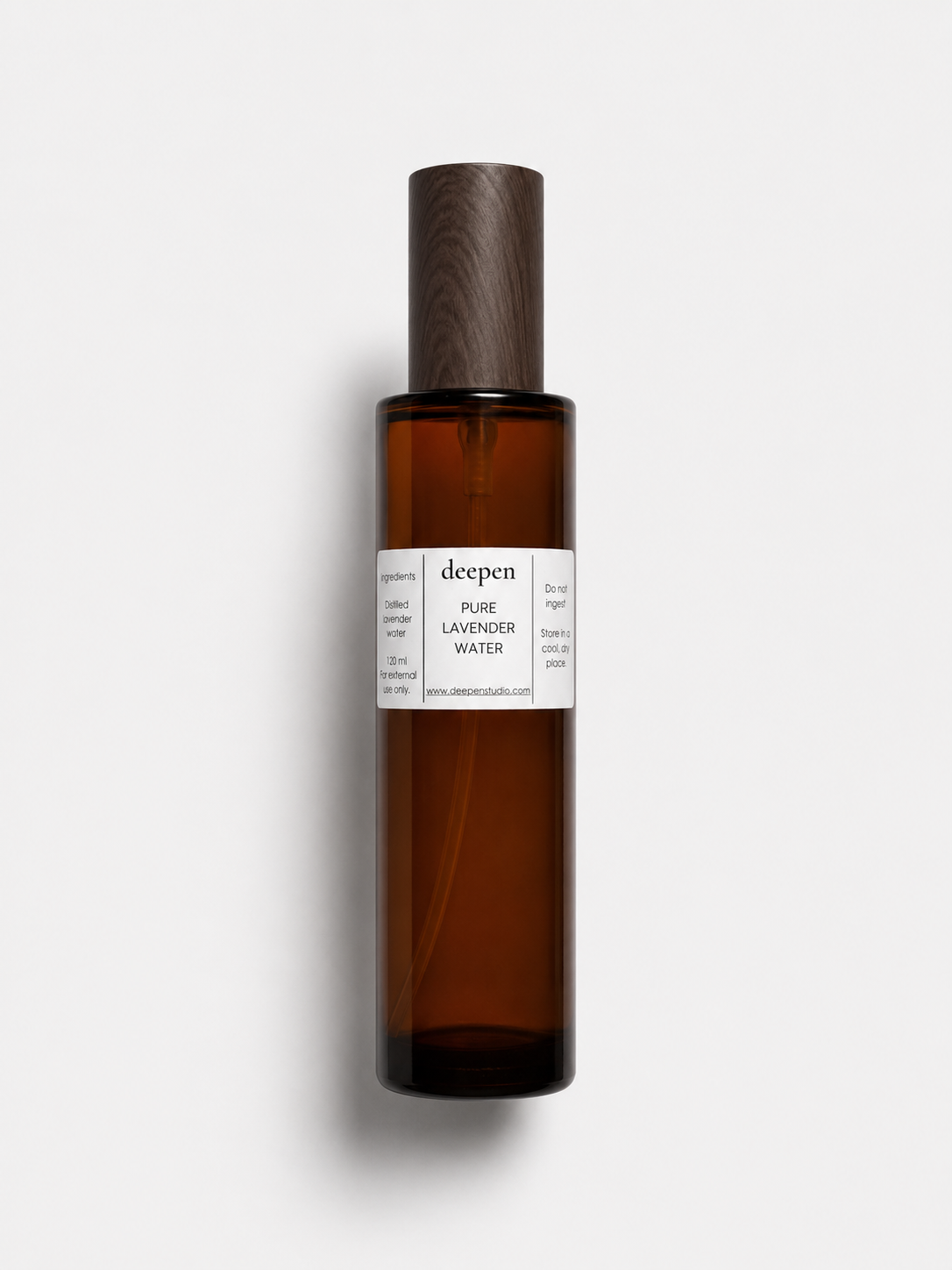
Pure Lavender Water
Pure Lavender Water
Couldn't load pickup availability
A steam-distilled lavender water, and nothing else. Soft, herbal and familiar — for skin after cleansing, for hair between washes, and for the pillowcase before bed.
What a hydrosol is
Hydrosol, floral water, hydrolat — all the same thing. It's the aromatic water that comes out of a steam distillation, carrying the plant's water-soluble compounds. The essential oil is the concentrated layer that floats to the top; this is the gentler half left underneath, and unlike an oil it goes straight onto skin without dilution.
If you'd like the longer version, we wrote one: hydrosols and essential oils, and when to use which.
About lavender
Lavandula angustifolia — true lavender — is the species grown for scent rather than for hedging. Mediterranean by origin, it now grows well in the cooler parts of Australia, and the fields in Tasmania and Victoria are worth seeing in December.
Its name comes from the Latin lavare, to wash. Lavender has been tied to bathing and to linen for as long as there are records of it, which is still where we think it works best: misted over a pillowcase, or through the last part of an evening.
How to tell a real hydrosol
Read the ingredient list. A true hydrosol names the distillate and very little else. Anything beginning with aqua followed by fragrance, parfum, alcohol or an essential oil plus a solubiliser is scented water — it smells fine, but it isn't the same material, and it's far cheaper to make than the price usually suggests.
The details
| Use | Face, hair, linen and pillows |
| Keeps | Six to twelve months once opened |
| Storage | Cool and out of direct sunlight — the fridge works well in summer |
| Origin | Made in China. Packed in Sydney. |
Part of our lavender botanicals. If you want lavender in a room rather than on skin, that's Lavender Essential Oil instead. Find us at Manly Market every Sunday, 9am–5pm, if you'd like to try it first.